





If you’ve ever had a throbbing ache at the very back of your jaw, you aren’t alone. For millions of people between the ages of 17 and 25, the arrival of wisdom teeth (third molars) feels less like a milestone and more like a dental emergency.
Why do these final four teeth cause so much chaos while the rest of our teeth grow in relatively peacefully? The answer lies at the intersection of human evolution, jaw anatomy, and modern oral health.
1. Our Jaws Simply Outgrew Them (Evolutionary Mismatch)
Early human ancestors relied on coarse, tough foods like roots, raw meat, nuts, and fibrous plants. To chew these foods, our ancestors needed broader, heavier jaws and extra grinding surface—enter the third molars.
Over thousands of years, two key shifts happened:
- Dietary changes: Cooking and food processing softened our diet, reducing the physical demand on our jawbones during childhood development.
- Brain growth & skull reshaping: Human brains expanded, and facial architecture flattened, leaving modern humans with substantially smaller jaws.
We still carry the genetic blueprint to grow 32 teeth, but our jaws usually only have room for 28.
2. Impaction: When Teeth Get Trapped
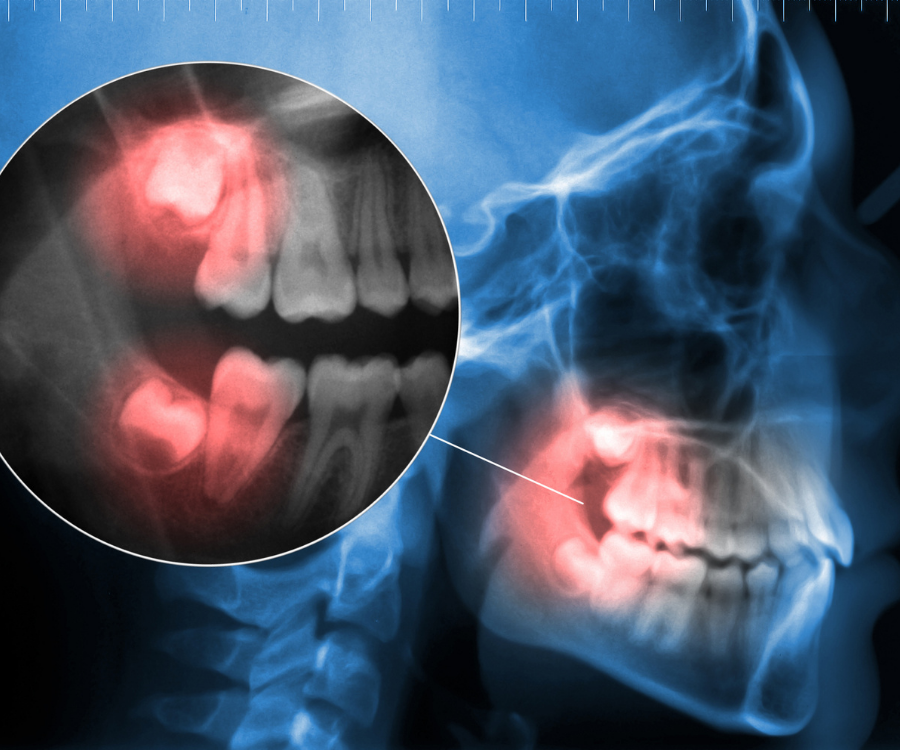
Because space is limited, wisdom teeth often cannot emerge straight up. Instead, they become impacted—trapped partially or completely beneath the gum line or jawbone.
- Horizontal / Angular growth: The tooth pushes sideways directly into the roots of the adjacent second molar.
- Partial eruption: The tooth only breaks halfway through the surface, creating a small flap of gum tissue (operculum) that traps food particles and bacteria.
3. Common Complications Caused by Third Molars
| Complication | How It Happens | Common Symptoms |
| Pericoronitis | Bacterial infection under the swollen gum flap around a partially emerged tooth. | Severe localized pain, bad taste, difficulty opening the mouth (trismus). |
| Damage to Adjacent Teeth | Pressure from an angled wisdom tooth wears down the roots of neighbouring healthy molars. | Chronic ache, increased sensitivity, bite misalignment. |
| Cysts and Bone Loss | Fluid-filled sacs form around an impacted tooth follicle, weakening jawbone structure. | Jaw stiffness, silent bone erosion (visible on X-rays). |
| Hard-to-Reach Decay | Positioning at the very back makes flossing and thorough brushing difficult. | Cavities on both the wisdom tooth and the adjacent second molar. |
Do All Wisdom Teeth Need to Come Out?
Not necessarily. If your wisdom teeth are completely erupted, healthy, positioned correctly, biting properly with opposing teeth, and easy to clean, dentists generally recommend leaving them in place while monitoring them during regular checkups.
However, proactive removal is common when X-rays show no room for normal eruption, preventing painful infections, orthodontic crowding, or nerve damage later in life.