





Why Some People Never Get Cavities (And the Science Behind It)
We all know someone who brushes once a day, rarely flosses, eats whatever they want, and still breezes through every dental checkup without a single cavity. Meanwhile, others brush twice daily, floss meticulously, avoid soda, and still end up with fillings.
Tooth decay is not purely a measure of personal hygiene. Cavity resistance comes down to a combination of genetics, microbiome balance, saliva chemistry, and anatomical structure.
The Biological Factors Behind Cavity Immunity
1. Saliva Chemistry and Flow Rate
Saliva serves as the mouth’s primary defense system against decay. Cavity-resistant individuals typically have:
- High Flow Rates: Rapid saliva production continually washes away loose food particles and dilutes bacterial acids.
- Higher Mineral Content: Saliva rich in calcium, phosphate, and fluoride ions actively remineralizes microscopic enamel lesions before they become structural cavities.
- Superior Buffering Capacity: Saliva containing higher concentrations of bicarbonate neutralizes acids quickly, keeping the oral pH above the critical threshold of 5.5 where enamel begins to demineralize.
2. A Protective Oral Microbiome
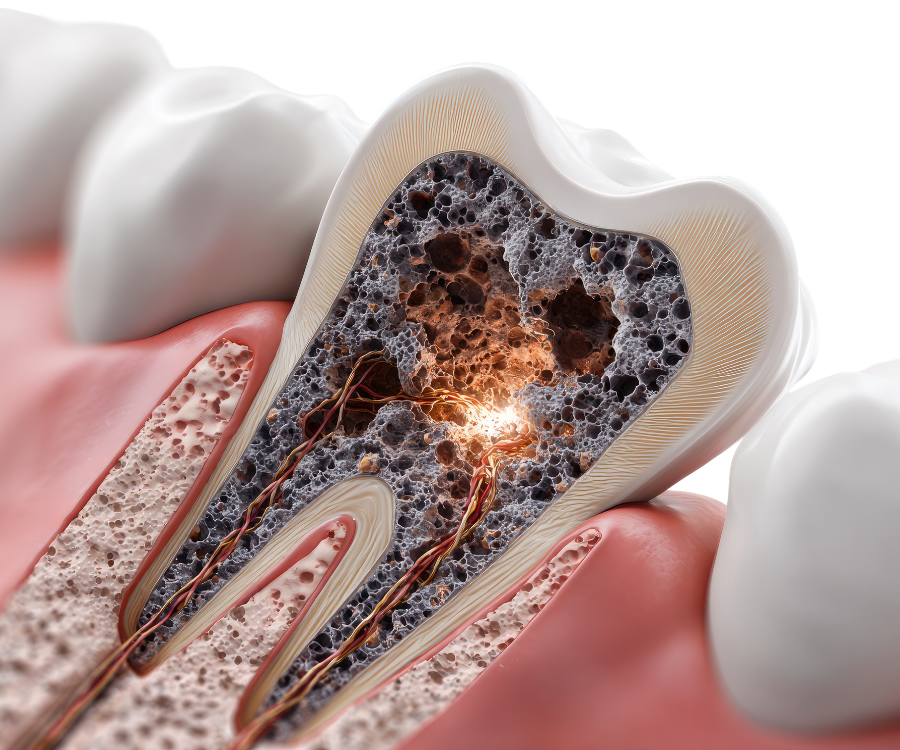
Cavities are caused by an infection of acid-producing bacteria, predominantly Streptococcus mutans and Lactobacillus.
- Individuals who never get cavities often harbor a microbial ecosystem dominated by beneficial or neutral strains (such as Streptococcus dentisani or Streptococcus gordonii).
- These protective bacteria outcompete decay-causing pathogens for nutrients and produce antimicrobial peptides that suppress S. mutans growth.
3. Enamel Density and Genetics
Enamel is the hardest substance in the human body, but its density varies from person to person.
- Amelogenesis Genes: Variations in genes responsible for enamel formation (such as ENAM, AMELX, and MMP20) dictate how tightly packed the hydroxyapatite crystal lattice is.
- Acid Resistance: Denser, well-crystallized enamel takes significantly longer to break down under acidic conditions compared to porous or hypomineralized enamel.
4. Tooth Anatomy and Alignment
The physical shape and arrangement of teeth play a quiet but significant role in decay susceptibility:
| Anatomical Factor | Lower Cavity Risk | Higher Cavity Risk |
| Fissure Depth | Shallow, smooth grooves on chewing surfaces | Deep, narrow pits that trap food and shield bacteria from toothbrushes |
| Tooth Alignment | Straight, evenly spaced teeth | Crowded or rotated teeth creating inaccessible plaque traps |
| Bite Contact | Broad, clean contact points | Tight, irregular contact areas prone to interproximal decay |
How to Strengthen Your Own Defense
While you cannot rewrite your genetics, you can influence your oral environment:
- Support Remineralization: Use toothpastes formulated with nano-hydroxyapatite or fluoride to replenish lost enamel minerals.
- Stimulate Saliva: Chew xylitol-sweetened gum after meals to boost salivary flow and inhibit S. mutans.
- Limit Acid Exposure Time: Sip water after consuming acidic beverages and avoid frequent snacking, which keeps oral pH in the danger zone for extended periods.