




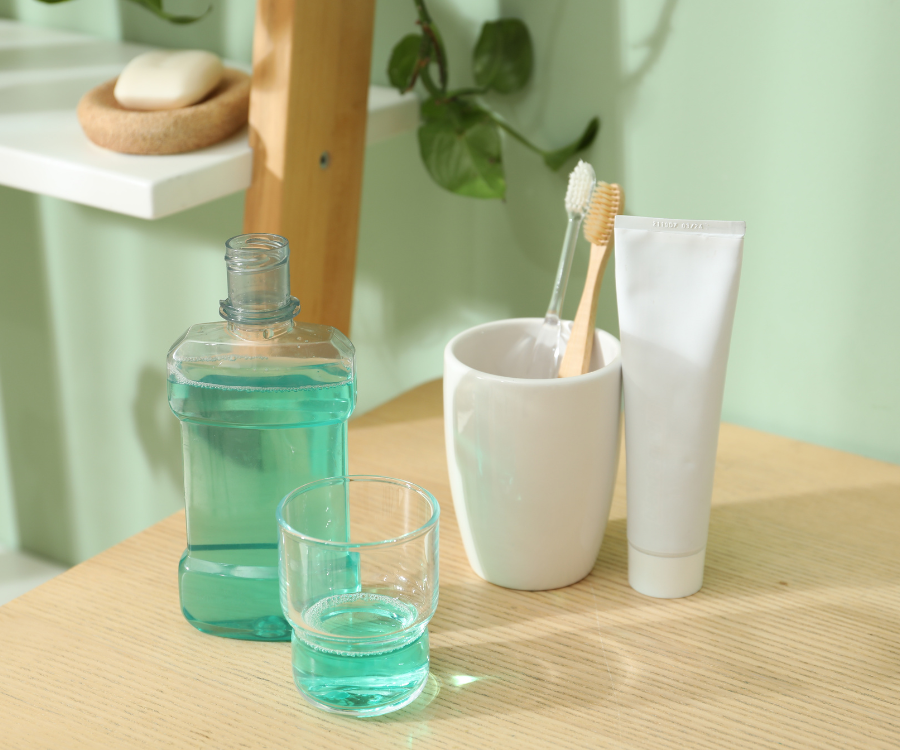
It’s a tempting shortcut. After all, your mouth feels tingly, minty, and clean after a good swish. But if you’re looking for the short answer: No, mouthwash absolutely cannot replace brushing.
Let’s break down exactly why brushing is non-negotiable, what mouthwash is actually doing, and how to build a routine that truly protects your teeth.
The Sticky Science: Why You Can’t Just “Swish” It Away
To understand why mouthwash isn’t a substitute for a toothbrush, you need to understand the enemy: plaque.
Plaque isn’t just loose food debris; it’s a sticky, complex film of bacteria (a biofilm) that aggressively adheres to your teeth. Think of it like a dirty frying pan after cooking eggs. If you just run hot water and dish soap over the pan, the stuck-on egg isn’t going anywhere. You need the mechanical friction of a sponge to physically scrub it off.
Your teeth work the exact same way:
- The Toothbrush (The Sponge): Provides the necessary physical friction to break up and sweep away the sticky bacterial biofilm.
- Mouthwash (The Soapy Water): Can kill some free-floating bacteria and wash away loose debris, but it is fundamentally incapable of stripping off the stubborn plaque glued to your enamel.
If plaque isn’t physically scrubbed away every 12 to 24 hours, it hardens into tartar (calculus). Once tartar forms, no amount of brushing or mouthwash will remove it—it can only be scraped off by a dental professional.
Brushing vs. Mouthwash: A Quick Comparison
While both play a role in a healthy oral hygiene routine, they do completely different jobs.
| Feature | Toothbrushing | Mouthwash |
| Primary Function | Physical removal of plaque and food | Chemical reduction of bacteria |
| Plaque Disruption | Highly effective (scrubs it away) | Ineffective against stuck-on plaque |
| Breath Freshening | Good (removes the source of odor) | Excellent (masks odor, kills microbes) |
| Stain Removal | Yes (lifts surface stains) | No |
| Status | Mandatory (2x daily) | Optional (Supplementary) |
So, What Is Mouthwash Actually Good For?
If it can’t replace brushing, is mouthwash completely useless? Not at all. When used as a supplement to brushing and flossing, the right mouthwash offers real benefits:
- Reaching the Unreachable: Liquid can flow between teeth and to the very back of the throat where your brush can’t quite reach, sweeping away loose particles.
- Targeted Treatments: Therapeutic mouthwashes containing fluoride help remineralize enamel and prevent cavities. Others contain antibacterial ingredients to help treat gingivitis and reduce gum inflammation.
- Instant Freshness: It’s unbeatable for a quick cosmetic fix to mask bad breath before a meeting or a date.
The Ideal Oral Care Routine
If you want to maximize your dental care, it’s not about choosing between brushing and mouthwash—it’s about the order in which you use them.1.Floss First:Crucial for tight spaces.
Flossing dislodges plaque and food particles trapped between your teeth. Doing this first ensures those tight spaces are clear so fluoride can enter them later.2.Brush for Two Minutes:Use a soft-bristled brush.
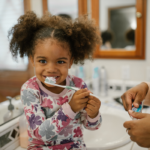
Use a fluoride toothpaste. Brush in gentle, circular motions to physically break up the plaque biofilm on all surfaces of your teeth and along the gumline.3.Wait Before Swishing:The golden rule of mouthwash.
Do not use mouthwash immediately after brushing. Toothpaste contains a highly concentrated dose of fluoride. If you rinse immediately with mouthwash, you wash that protective fluoride away. Wait at least 30 minutes, or use mouthwash at a completely different time of day (like after lunch).
The Bottom Line
Mouthwash is a fantastic wingman, but it cannot be the star of the show. Skipping the brush in favor of a swish leaves the most dangerous, cavity-causing bacteria glued right to your teeth. So, the next time you’re tired at night, push through those two minutes of brushing—your future self (and your dentist) will thank you!